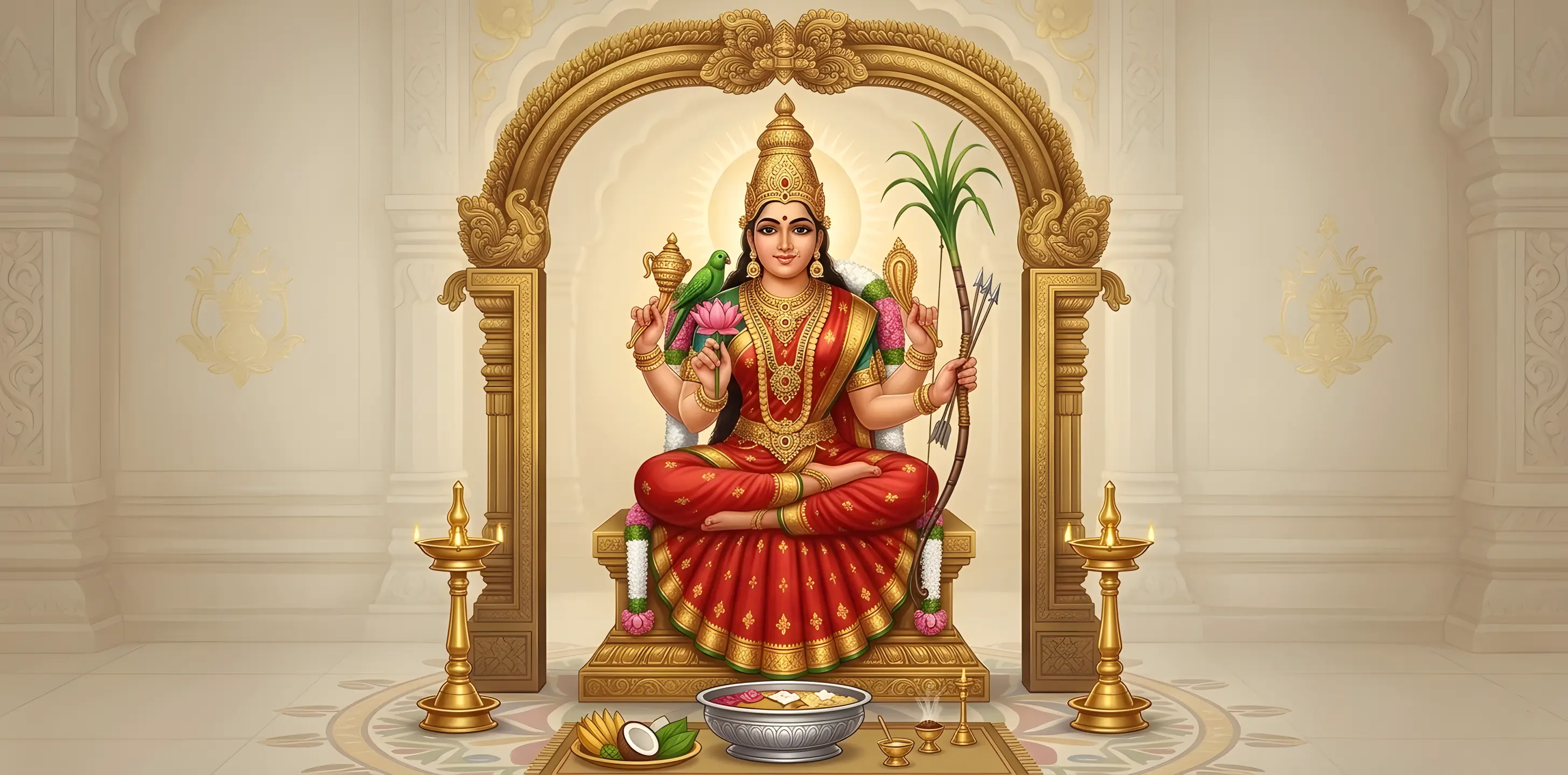
Chandi
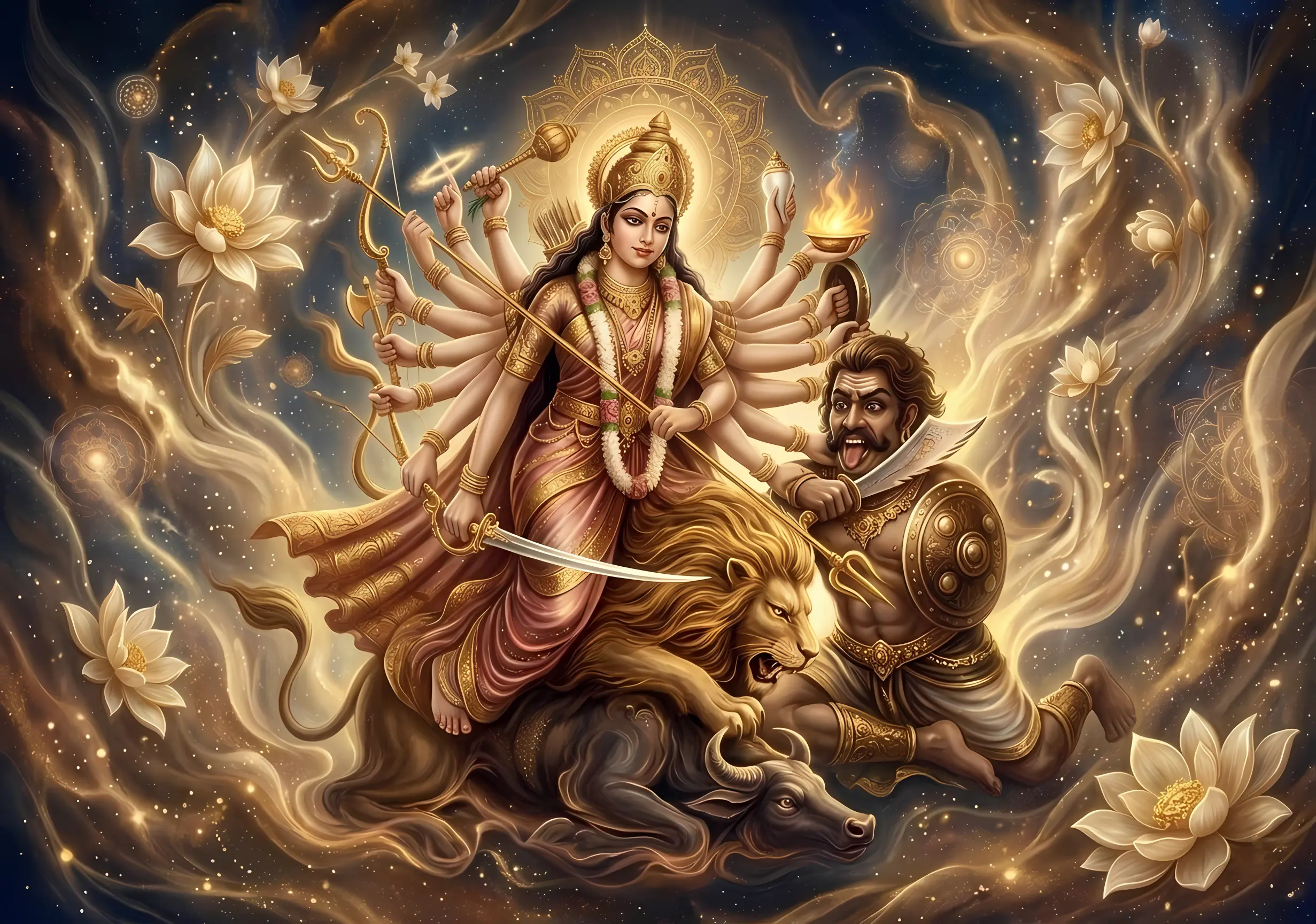
Chandi Vidya is the sacred path of worship of the Divine Mother in Her fierce, protective, and victorious form, rooted in the Devi Mahatmyam, also known as the Durga Saptashati or Chandi Path. This tradition reveals the Goddess as the supreme force who destroys negativity, restores divine order, and guides the seeker toward inner strength and spiritual awakening. In its deeper meaning, the demons described in the scripture represent inner obstacles such as ego, anger, fear, desire, and ignorance, while the victory of the Goddess symbolizes the triumph of higher consciousness over limitation. Chandi Vidya unfolds through the three primary powers of the Mother: Mahakali, who destroys tamas and deep-rooted delusion; Mahalakshmi, who grants strength, transformation, abundance, and victory; and Mahasaraswati, who bestows wisdom, clarity, refinement, and illumination. A central foundation of this path is the Navarna Mantra, revered as the living essence of the Goddess and a powerful means of inner awakening. Chandi Vidya also embraces the worship of the Nava Durgas, the Nava Shaktis, and the deeper current of Navarna Vidya, revealing the many dimensions through which the Divine Mother protects, disciplines, nourishes, and elevates the aspirant. Ultimately, this Vidya teaches that the entire universe is the play of Shakti, and its highest goal is to lead the seeker from struggle to strength, from confusion to wisdom, and from bondage to liberation.


Shaivam
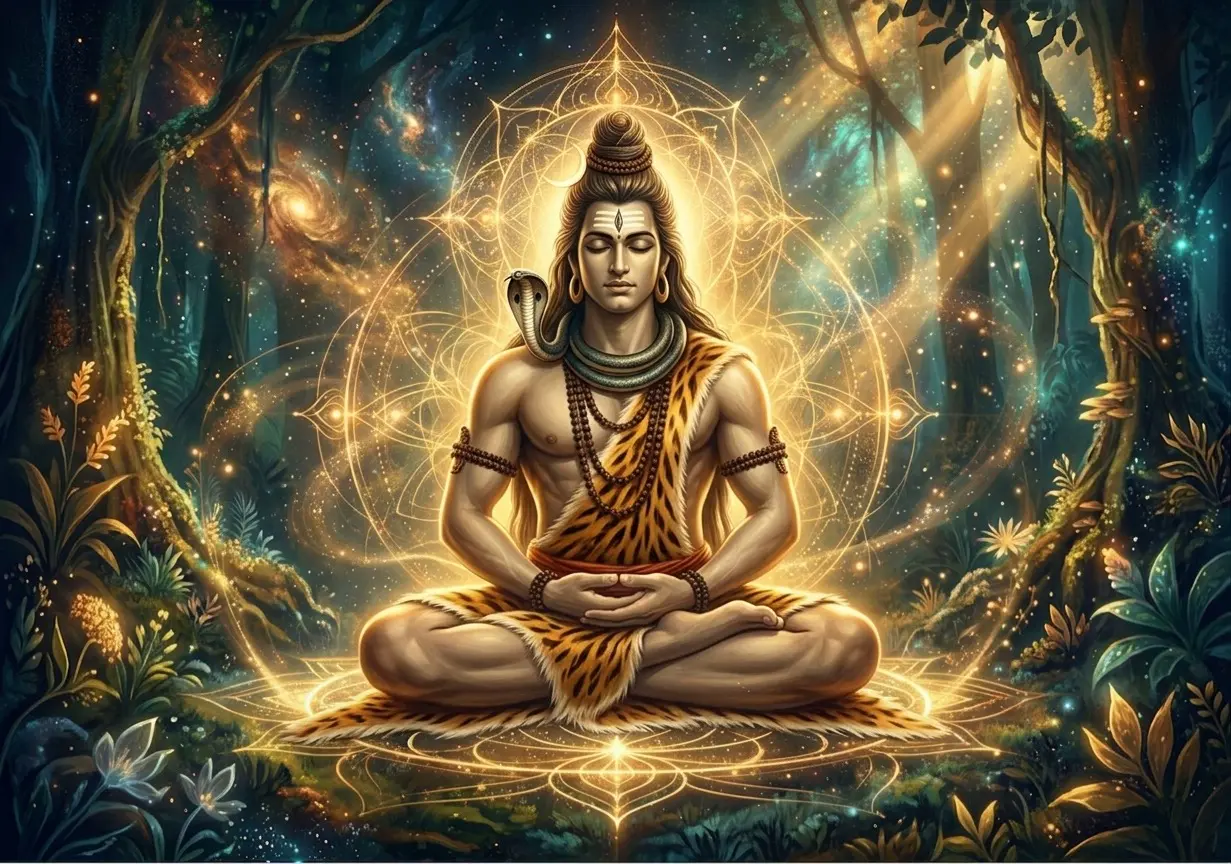
Shaivism is one of the oldest and most profound traditions of Hinduism, centered on the worship of Lord Shiva as the Supreme Reality. In this tradition, Shiva is not understood merely as the destroyer, but as the source, sustainer, dissolver, revealer, and concealer of the entire universe. A foundational principle in Shaivite thought is the triad of Pati, Pashu, and Pasha, where Pati is the Lord, Pashu is the individual soul, and Pasha is the bondage that keeps the soul limited. These bondages include ego, karma, and maya, which prevent the soul from realizing its true nature. The ultimate goal of Shaivism is moksha, liberation from these limitations and union with Shiva or eternal bliss in His presence. Shaivism also places great emphasis on yoga, meditation, and inner realization, seeing Shiva as the Mahadev, the first and supreme yogi. Lord Shiva is worshipped in many sacred forms such as Mahadeva, the Great God, Nataraja, the cosmic dancer, Dakshinamurthi, the silent guru of wisdom, Bhairava, the fierce destroyer of fear and ego, and Rudra, the intense protective form. He is often adored in the form of the Shiva Linga, which represents the infinite and formless nature of the Divine. Alongside Shiva, Shakti as Parvati holds a central place, for Shaivism teaches that Shiva and Shakti, consciousness and energy, are inseparable. This unity is beautifully expressed in the form of Ardhanarishvara, where the Divine appears as both masculine and feminine in one body. The tradition also reveres Ganesha, the remover of obstacles, and Kartikeya or Skanda, the divine commander and embodiment of spiritual valor. Through devotion, discipline, knowledge, and direct inner practice, Shaivism leads the seeker from bondage to freedom and from limited identity to the realization of the supreme Shiva Tattva.
Vaishnavam
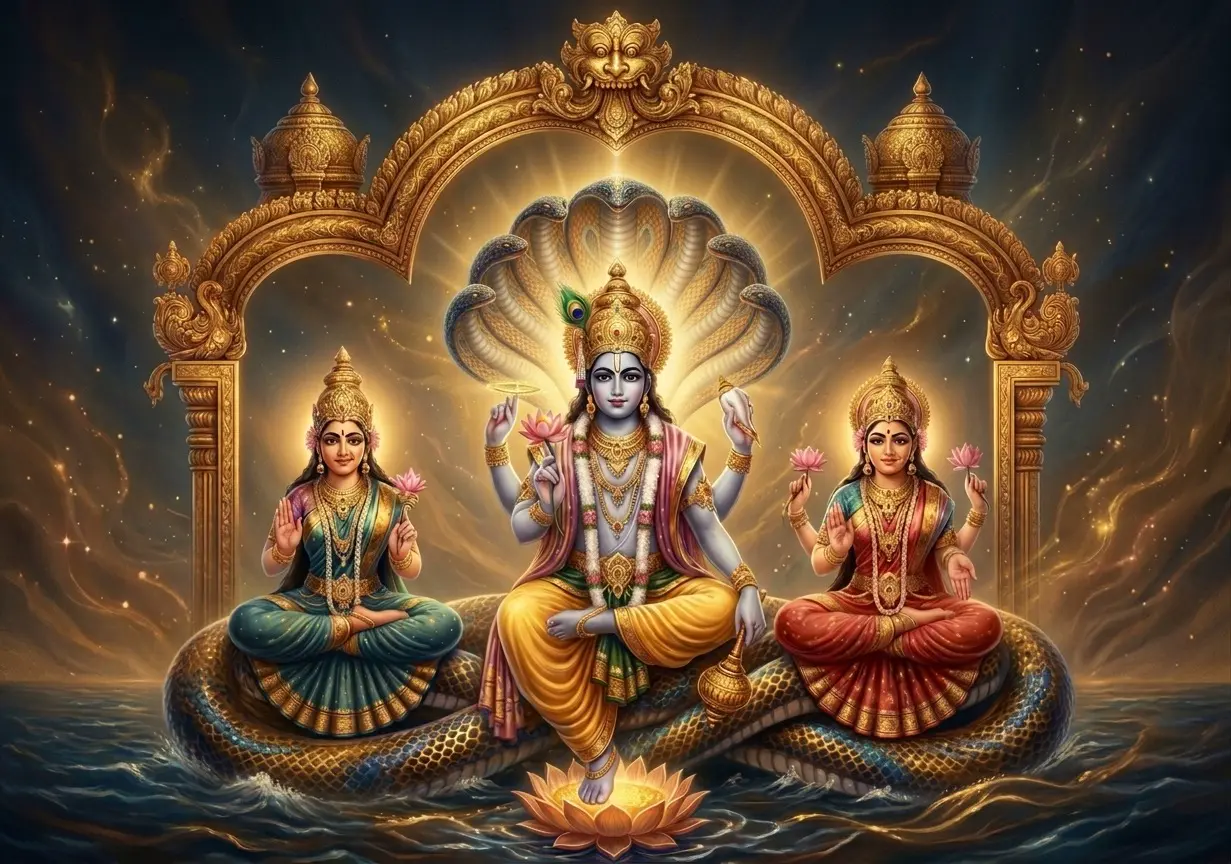
Vaishnava Tantra is the sacred tradition of worship centered on Lord Vishnu as the Supreme Reality, the sustainer of the universe, and the protector of Dharma. Rooted in the broader current of Vaishnavism, this path combines Bhakti, mantra, ritual worship, inner discipline, and contemplative realization to lead the seeker toward divine grace and liberation. In this tradition, Vishnu is understood not only as the cosmic preserver but as the compassionate Lord who descends into the world through various Avatars whenever righteousness declines and disorder rises. The heart of Vaishnava Tantra is the relationship between the individual soul and the Supreme Lord, where the soul seeks fulfillment through surrender, devotion, and eternal communion with Him. A central principle of this path is Prapatti or Saranagati, the complete surrender of the self to the divine will of Vishnu. Its highest goal is Moksha, not merely as release from bondage, but as entry into the grace-filled presence of the Lord in Vaikuntha. The tradition draws authority from sacred texts such as the Bhagavad Gita, the Bhagavata Purana, the Vishnu Purana, and the Ramayana, all of which reveal the majesty, compassion, and saving power of Vishnu. Vaishnava Tantra reveres the many manifestations of the Lord, especially forms such as Rama, the embodiment of righteous kingship and dharma, Krishna, the divine teacher and Lord of love, Varaha, who rescued the Earth, and Narasimha, who destroyed tyranny and protected devotion. It also honors wisdom-bestowing and esoteric forms such as Dattatreya and Hayagriva, who represent divine knowledge, revelation, and the transmission of spiritual insight. Through mantra, yantra, devotion, temple worship, and inner contemplation, this path teaches that the Lord is both transcendent and intimately present in the heart of the devotee. Vaishnava Tantra therefore offers a complete spiritual vision in which knowledge, surrender, protection, devotion, and divine grace come together, guiding the seeker from worldly bondage to the realization of the eternal Vishnu Tattva.
Ganapatyam
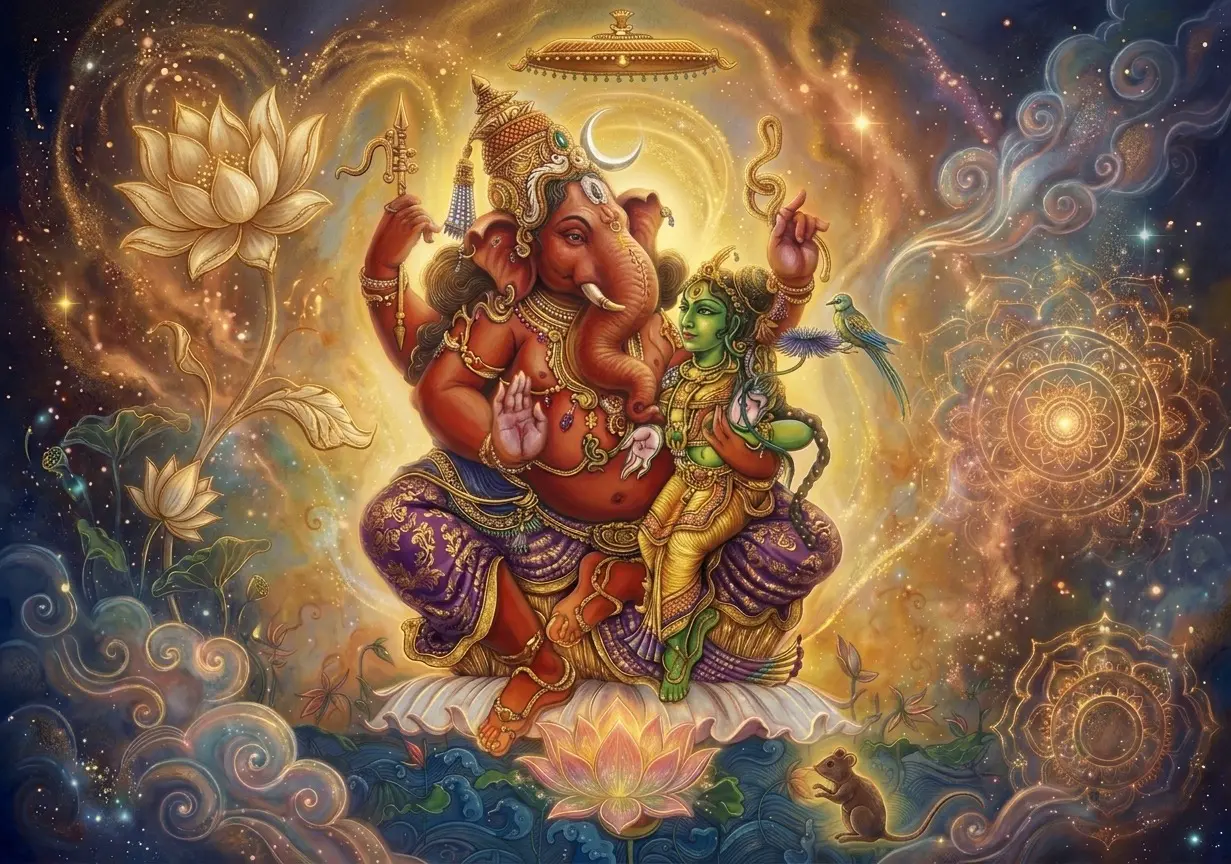
Ganapatyam is one of the major traditions within Hinduism that centers on the worship of Lord Ganesha or Ganapati as the Supreme Reality and Parabrahman. While Ganesha is widely worshipped as the remover of obstacles at the beginning of all sacred undertakings, the Ganapatya tradition regards Him as the creator, sustainer, and dissolver of the entire universe. This path is recognized as one of the six major streams of worship within the Shanmata system traditionally associated with Adi Shankara. The philosophical core of Ganapatyam teaches that Ganesha is the source from which all gods, worlds, and energies arise, and that He is deeply identified with the sacred syllable Om or AUM. Its principal scriptures include the Ganesha Purana, the Mudgala Purana, and the Ganapati Atharvasirsha, which present Him as both the visible deity and the highest metaphysical truth. Worship in this tradition gives special importance to red flowers, red sandalwood, red garments, Durva grass, and Modaks, all of which are especially dear to Ganapati. Historically, Ganapatyam developed into several important schools such as Maha Ganapatya, Haridra Ganapatya, Ucchishta Ganapatya, Navanita Ganapatya, Swarna Ganapatya, and Santana Ganapatya, each emphasizing a distinct manifestation and mode of worship. The tradition also reveres the many sacred forms of Ganesha described in scripture, especially the celebrated 32 forms of Ganesha found in the Mudgala tradition. Among these, forms such as Bala Ganapati, Taruna Ganapati, Bhakti Ganapati, Vira Ganapati, Nritya Ganapati, and Heramba Ganapati are especially beloved and symbolically rich. Each of these forms reveals a different dimension of Ganapati’s nature, ranging from innocence and devotion to heroism, wisdom, joy, and divine protection. Ganapatyam therefore presents Lord Ganesha not merely as a deity of auspicious beginnings, but as the all-encompassing Divine who governs knowledge, power, order, protection, and liberation. Through devotion, mantra, ritual, and contemplative understanding, this tradition leads the seeker toward the realization of Ganapati Tattva, the supreme principle underlying all existence.
Sauram
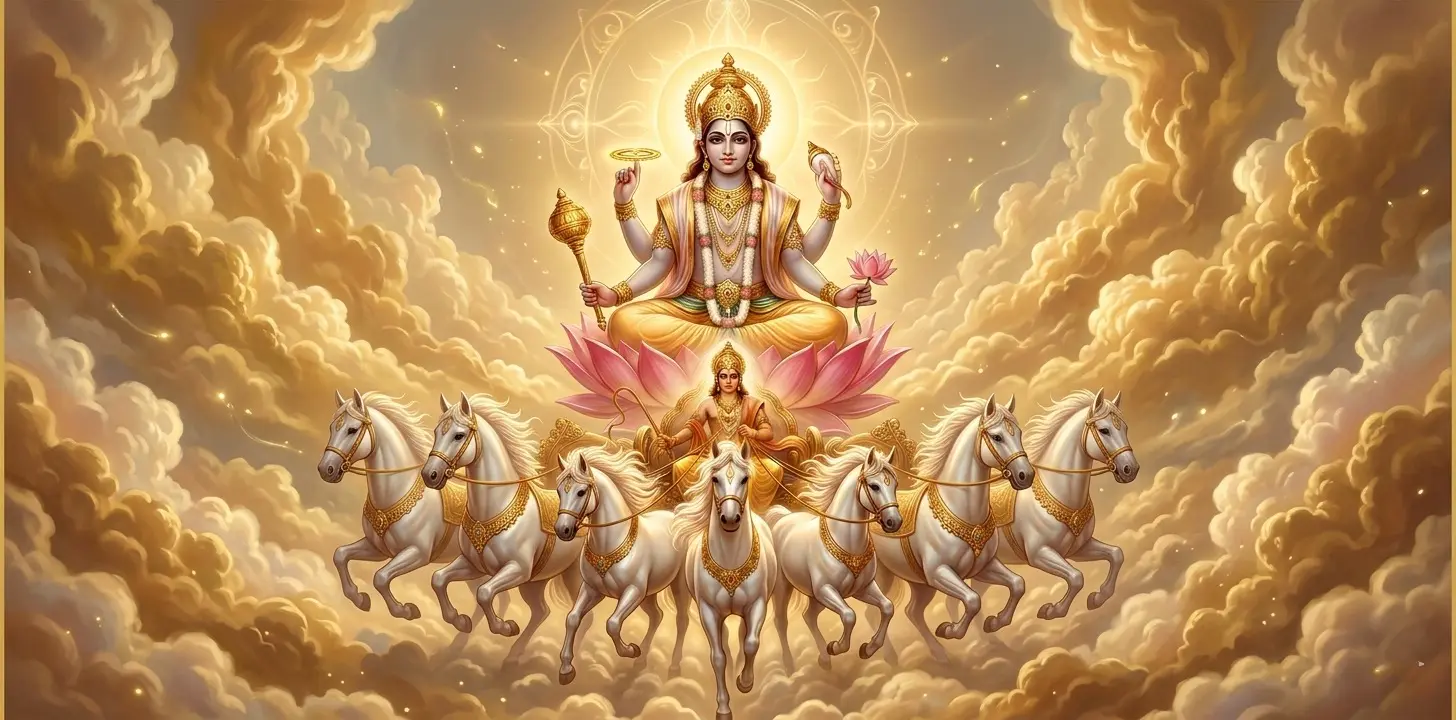
Saura Tantra is the sacred tradition centered on the worship of Lord Surya as the Supreme Reality, the visible form of the Divine, and the radiant source of life, power, order, and consciousness. Rooted in the ancient current of Sauram or Saura Hinduism, this path reveres Surya as the Pratyaksha Devata, the directly perceivable deity through whom the hidden Brahman becomes manifest to the world. In this tradition, Surya is not seen merely as the physical sun, but as the creator, sustainer, and dissolver of the cosmos, the inner witness of all beings, and the very soul of existence, as declared in the Vedic vision of Surya Atma Jagatas Tasthushashcha. Saura Tantra teaches that through disciplined worship of the Sun at the three sacred junctions of the day, dawn, noon, and sunset, the seeker gradually purifies karma, strengthens prana, illumines the intellect, and moves toward Moksha. This path gives great importance to mantra, especially the sacred Gayatri Mantra, along with scriptural sources such as the Samba Purana, the Bhavishya Purana, and the Surya Shatakam, which extol the Sun as the life-giving Lord of all worlds. Saura worship also carries profound symbolic force, including the use of the red circular tilak, representing solar radiance, vitality, and the luminous center of consciousness. The tradition reveres Surya in His twelve great forms known as the Dvadashadityas, each embodying a distinct cosmic function, including Dhata, Aryaman, Mitra, Varuna, Indra, Vivasvan, Tvashtha, Vishnu, Amshuman, Bhaga, Pushan, and Parjanya. These forms express the Sun’s many roles as nourisher, protector, law-giver, architect, preserver, bestower of prosperity, and regulator of the seasons and cosmic rhythm. Saura Tantra also recognizes the wider solar family, including His consorts Sanjna and Chaya, His sons such as Yama, Shani, and Vaivasvata Manu, and His charioteer Aruna, who embodies the red glow of dawn and the threshold of awakening. Through devotion, mantra, inner discipline, and solar contemplation, Saura Tantra leads the aspirant toward vitality, clarity, righteous living, spiritual illumination, and the realization of the eternal Surya Tattva.
Skaandam
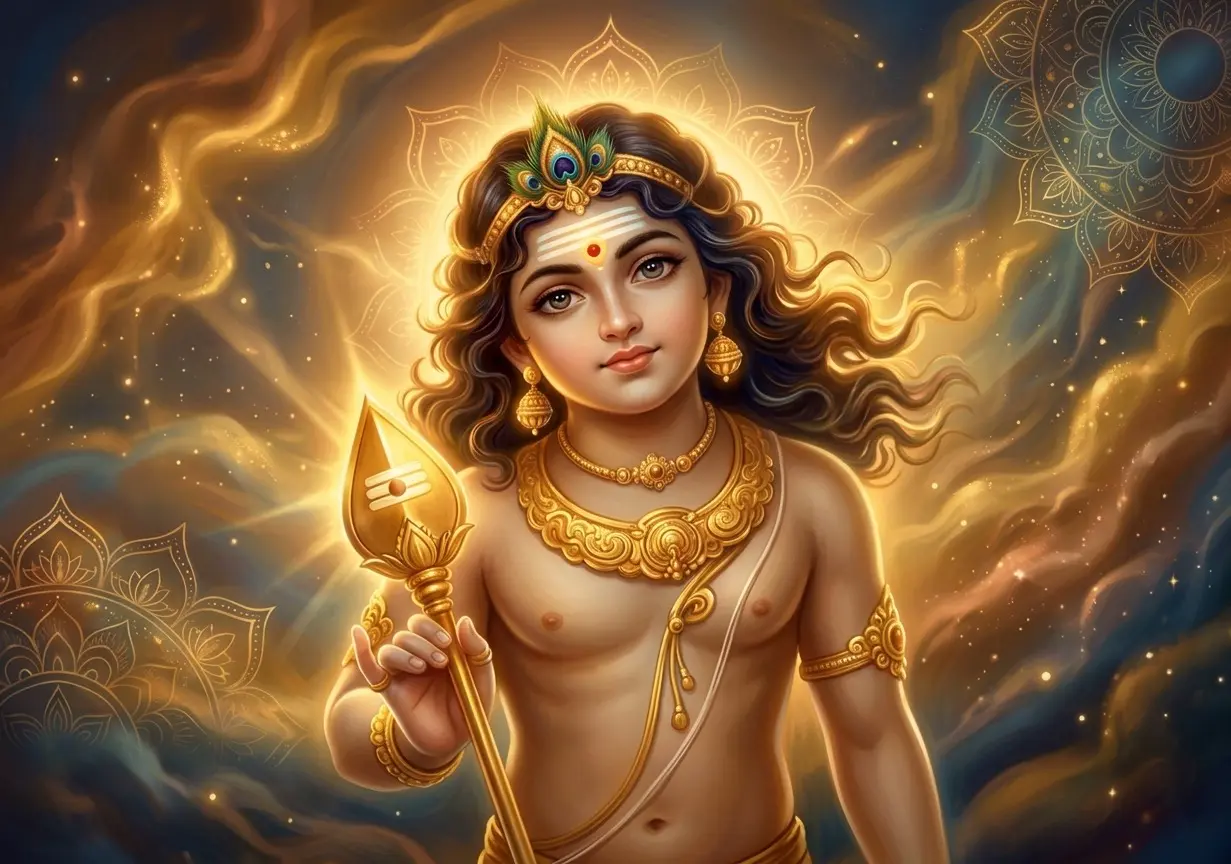
Skanda Tantram, also known within the broader stream of Kaumaram or Skaandam, is the sacred tradition centered on the worship of Lord Skanda, also revered as Murugan, Kartikeya, Subrahmanya, and Kumara, as the Supreme Divine Reality. It is one of the six great streams of worship within the Shanmata tradition and holds a place of special prominence in South India, especially in Tamil spiritual culture. This path presents Skanda as the embodiment of Jnana, Veerya, and Compassion, uniting spiritual wisdom, heroic शक्ति, and divine grace in one radiant form. He is worshipped as the Commander of the Devas, born from the fiery sparks of Shiva’s third eye for the destruction of adharma and the defeat of the asura Surapadman. Skanda is also adored as Swaminatha, the divine Guru who revealed the meaning of the sacred Pranava, Om, even to Lord Shiva, thus establishing Him as the Lord of supreme wisdom. His most sacred emblem is the Vel, the luminous spear that symbolizes penetrating intelligence, spiritual insight, purity of purpose, and the power to cut through illusion. In many traditions, the Vel itself is worshipped as the very presence of Skanda, for it embodies His knowledge, force, and protective grace. Skanda is often worshipped along with His two consorts, Valli and Deivayanai, who represent Iccha Shakti and Kriya Shakti, the powers of divine will and divine action. The tradition also reveres His many iconographic forms such as Shanmukha, the six-faced Lord of total vision, Kartikeya, the child of the Krittikas, Kumara, the eternally youthful one, Guha, the hidden indweller of the heart, Skanda, the concentrated force of Shiva, and Velayudha, where the Vel becomes the central object of worship. Through mantra, devotion, discipline, inner worship, and direct spiritual practice, Skanda Tantram leads the aspirant toward courage, clarity, mastery of the senses, awakening of inner knowledge, and finally the realization of the radiant Subrahmanya Tattva.