Sri Vidyā: The Sacred Path of Mantra, Yantra, and Divine Consciousness
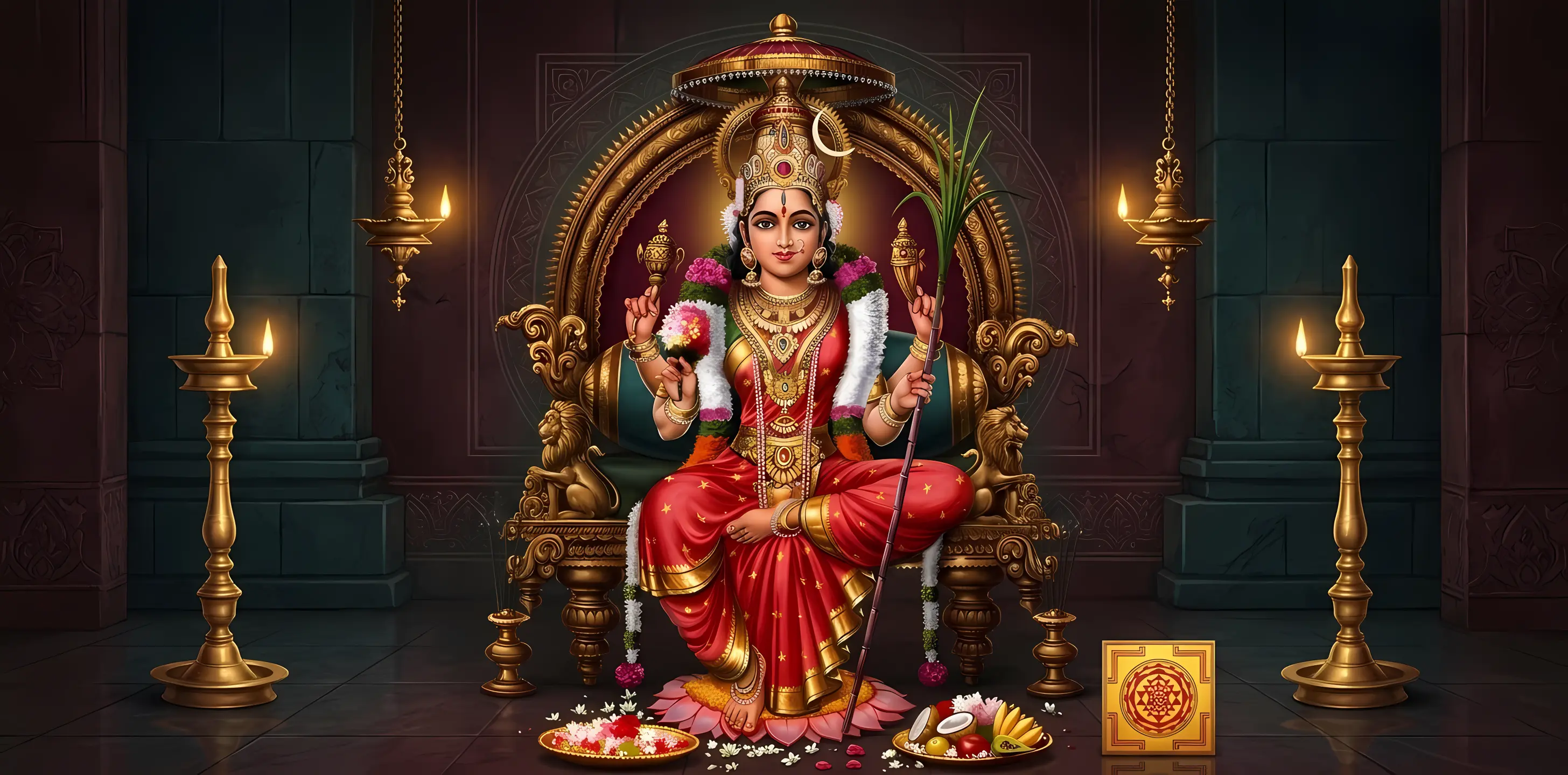
Sri Vidyā is one of the most profound and luminous streams of the Tantric and Śākta traditions. It is a path of beauty, depth, reverence, and inner awakening. To many, it begins with devotion to Lalitā Mahātripurasundarī, the Divine Mother who shines as grace, wisdom, beauty, and supreme power. But Sri Vidyā is far more than a form of worship in the ordinary sense. It is a complete spiritual vision in which the human being, the cosmos, sacred sound, divine geometry, and pure consciousness are understood as expressions of one indivisible Reality. This tradition does not ask the seeker to reject the world in order to find the Divine. Instead, it reveals that the Divine is already present within the world, within the body, within sound, within awareness, and within the deepest center of one’s own being. Sri Vidyā is thus both a path of worship and a path of recognition. It leads the seeker from outer forms into inner experience, and from inner experience into the direct intuition of the Divine Mother as the very essence of existence. The word Sri carries the sense of radiance, auspiciousness, splendor, grace, and divine abundance. Vidyā means sacred knowledge, not merely intellectual knowledge, but a wisdom that transforms. Sri Vidyā, therefore, is not simply a doctrine to be studied. It is sacred wisdom that is meant to be lived, contemplated, and realized. In this tradition, the Goddess is not understood only as a deity external to the seeker. She is the power behind creation, the intelligence within mantra, the stillness at the heart of meditation, and the consciousness by which all things are known. Sri Vidyā teaches that the Divine Mother is both transcendent and immanent. She is beyond all manifestation, yet she is also the life within all manifestation.
Principal Deities of Sri Vidya
In Sri Vidya, the Supreme Mother is approached through a defined spiritual order, not through unstructured devotion. At Sri MahaVidyesvari Tantra Peetham, we follow the Parashurama Kalpasutras, which lay down the traditional sequence, discipline, and ritual framework for this path. Within this framework, the principal deities are understood as functional powers of the same Divine Reality. Maha Ganapati removes obstruction and prepares the sādhaka for worship. Shyamala / Matangi governs mantra, speech, knowledge, and refinement of understanding. Varahi protects, disciplines, and destroys forces that hinder spiritual progress. Bala gives you the foundation of entire system. This ordered movement culminates in Sri Lalita Tripurasundari, the Para Devata of Sri Vidya, who reigns at the Bindu of the Sri Chakra. Thus, these deities are not separate objects of worship, but ordained gateways through which the sādhaka is led, prepared, protected, and finally brought into the presence of the Supreme Mother.


Deities of the Chakras
Beyond the principal deities through whom Sri Vidya is approached, the tradition also recognizes specific divine forms associated with the inner chakras. These deities are contemplated not merely as symbolic presences, but as living powers that regulate, refine, and elevate the energies operating within the subtle body. Each chakra carries its own tendencies, strengths, and distortions, and the deity presiding over that center assists the sādhaka in bringing that field into order, purity, and spiritual usefulness. In this vision, chakra worship is not undertaken for sensation or occult curiosity, but for inner balance, discipline, and transformation. Desire must be purified, will must be regulated, the heart must be softened, speech must be sanctified, and the mind must be made fit for higher command. The deities of the chakras represent this ascending process by which raw human energy is gradually refined into awareness, devotion, steadiness, and insight. Different deities are worshipped at different chakras in order to regulate, purify, and elevate the energies active within the subtle body. In this traditional understanding, Lord Subrahmanyam is contemplated at Swadhisthana to discipline desire and transform instinctive force, Lord Shasta at Manipura to govern will, power, and inner restraint, Lord Gopala at Anahata to awaken devotion, tenderness, and harmony of heart, Neelakanta at Vishuddhi to purify speech and transmute inner and outer poison, and Shiva-Shakti at Ajna to unite consciousness and power in higher insight. Thus, the chakra deities are not approached as isolated gods, but as sacred forces that help the sādhaka balance the inner centers and prepare the ascent toward higher realization.
Scriptural Sources for Sri Vidya
The tradition of Sri Vidya is not merely a study of texts, but a lived transmission received through an unbroken Guru Parampara. This lineage ensures that the esoteric meanings of the vidya are preserved and passed down through diksha (initiation) and oral instruction. In our tradition, the authority of the Shastras is inseparable from the grace of the Preceptor; without the guidance of the lineage, these complex metaphysical structures remain dormant. This "ear-to-ear" transmission transforms theoretical knowledge into a functional spiritual technology, grounding the practitioner in a lineage that stretches back to the primordial sources of wisdom. Our curriculum is anchored in a specific corpus of canonical texts that define the philosophy and ritual precision of the path. We rely on the Brahmanda Purana, specifically the Lalithopakyanam and Lalitha Sahasranama, for the foundational theology and the thousand names of the Divine Mother. The practical application of these teachings is governed by the Parashurama Kalpasutra and its indispensable manual, the Nityotsava. For deep philosophical exposition, we look to the Yogini Hridaya, the Tantra Raja Tantra, and the exhaustive ritual compendium of the Sri Vidyarnava. These works provide the structural framework for understanding the Srichakra and the internal alchemy of the soul. Beyond these primary scriptures, our specific parampara is enriched by a massive scholarly and experiential legacy consisting of approximately 250 reference guides. This extensive library includes specialized commentaries such as Bhaskararaya’s Saubhagya Bhaskaram and the Varivasya Rahasya, which decode the subtlest layers of mantra and tantra. These hundreds of guides serve as a roadmap for the practitioner, offering the granular detail required for prakriya (methodology) and ensuring that every aspect of the worship is aligned with traditional mandates. By synthesizing these diverse sources, we offer a path that is both scripturally rigorous and deeply rooted in ancestral practice.
Course Structure & Enrollment
The structural integrity of our curriculum is built upon the principle of Krama-Siddhanta—a disciplined, linear progression that mirrors the soul's ascent through the Srichakra. Unlike academic learning, this path is strictly experiential; advancement to subsequent levels is predicated not merely on the completion of time, but on the attainment of specific Siddhis and internal markers of proficiency. Each stage serves as a mandatory foundation, ensuring that the aspirant’s subtle body is sufficiently purified and stabilized to handle the higher energetic frequencies of the next transmission. By maintaining these rigorous standards of Adhikara (eligibility), we preserve the efficacy of the Vidya and protect the seeker from the imbalances of premature practice. To accommodate the complexities of modern life, the primary instruction is delivered through a robust online framework, meticulously designed to distill the profound complexities of Sri Vidya into digestible, actionable steps. However, certain advanced levels may necessitate a physical presence for in-person intensives lasting three to five days. These residential modules, currently being finalized, are essential for the transmission of specific Nyasa and ritual nuances that require direct oversight. Our goal is to bridge the gap between ancient asceticism and the contemporary professional world, creating a "Sadhana for the Householder" that is both spiritually uncompromising and practically sustainable within a hectic daily schedule. Beyond the core Sri Vidya path, the curriculum integrates a vast array of Anga-Vidyas and auxiliary sciences essential for a well-rounded practitioner. These supplementary teachings provide the necessary tools—ranging from mantra-shastra to internal alchemy—that support and nourish the central practice. As we prepare for the upcoming enrollment cycle, all administrative updates will be channeled exclusively through our WhatsApp community. We invite serious aspirants to join this digital Sangha via the link below to remain aligned with our activities and receive timely insights into the unfolding of these sacred teachings.